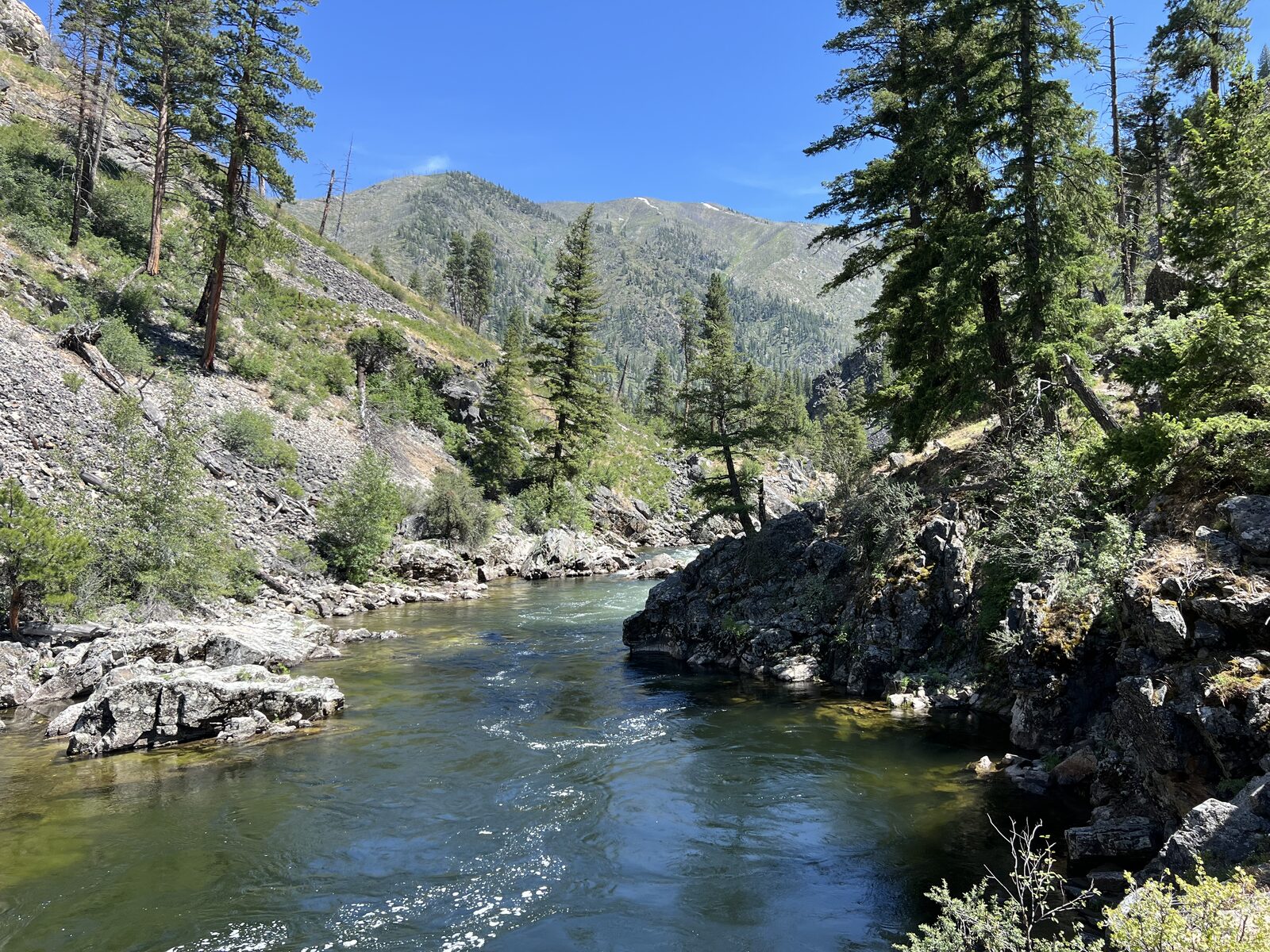
Last summer, I pushed a loaded raft down the ramp at Boundary Creek and into the Middle Fork of the Salmon River knowing that, if everything went according to plan, I wouldn't be getting off the Salmon for nearly 300 miles.
Of course, "if everything went according to plan" is a fairly ambitious statement when you're talking about three weeks on a wild river.
There were hundreds of rapids between Boundary Creek and the Snake River. River levels would change. The weather would change. People would come and go. Over the next three weeks, I would travel through stretches of technical whitewater, big water, long days and remote camps alongside three different groups of people.
The one constant throughout the entire 295 miles would be my friend Jen.
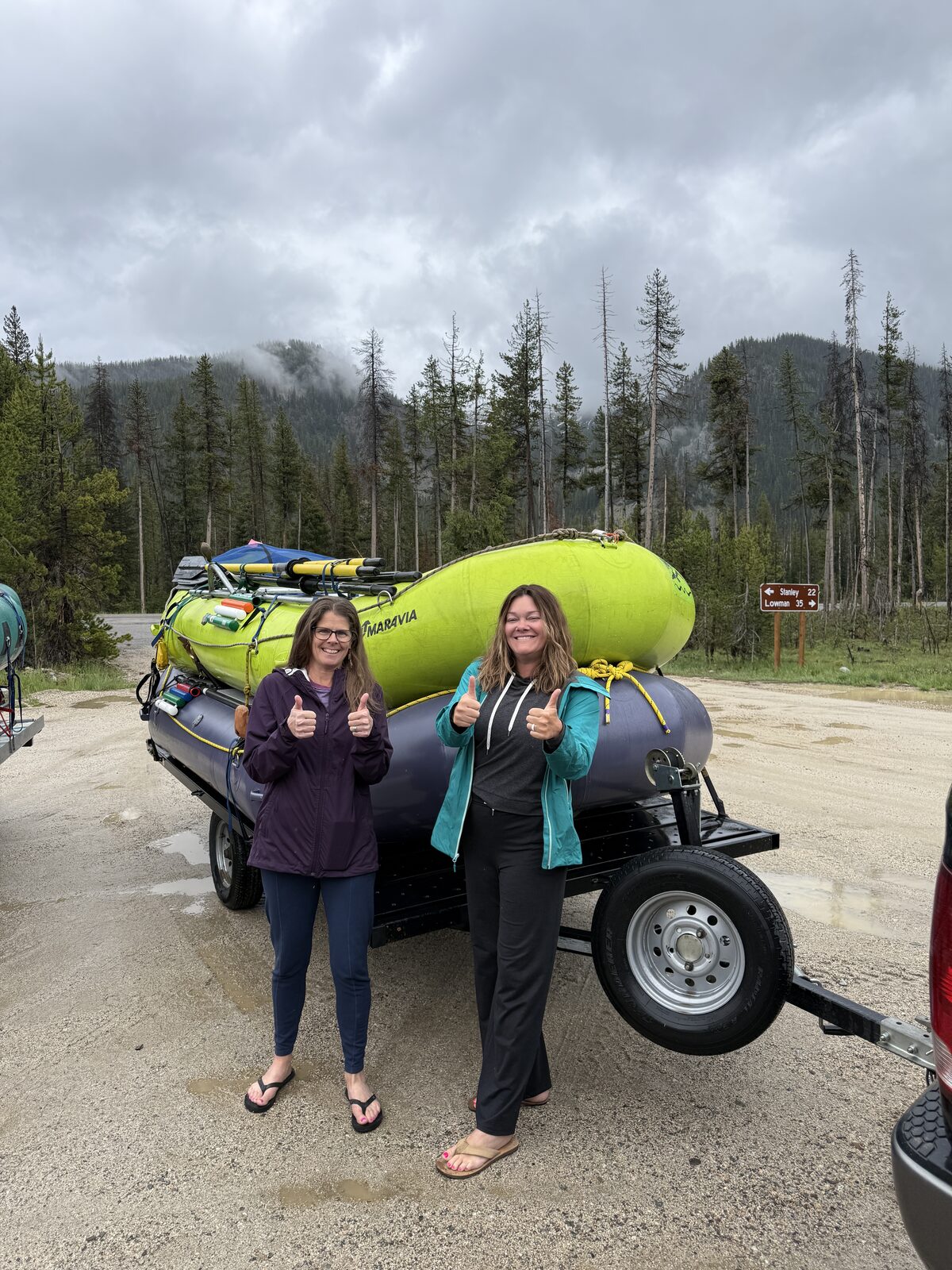
And honestly, if you're going to spend three weeks and 295 miles with one person, Jen is a pretty damn good choice.
She's a former river guide, a mom, a complete badass and one of my favorite people to share a boat ramp, a camp or a stretch of whitewater with. More importantly, she's just incredibly easy to be around.
Over the years, we've developed an almost wordless rhythm. Whether we're unloading boats, setting up camp or sitting above a rapid, we somehow just know what needs to be handled. There's very little discussion about who needs to do what. We both see it and get to work.
On the water, that trust matters even more. I know how Jen thinks. I trust her judgment and her ability completely, and I know she trusts mine.
No drama. No ego. Just teamwork.
I didn't know it as I pushed my boat into the water at Boundary Creek, but that partnership would become one of the most important parts of the journey ahead.
For years, I'd wanted to connect these stretches of the Salmon into one continuous trip. Now, somehow, through what can only be described as a series of small miracles, Jen and I were about to try it.
Two hundred and ninety five miles. It was actually happening.
First, You Have to Get Lucky
People have asked me over and over how I managed to put this trip together.
The short answer?
I hit the river lottery jackpot.
Getting a permit for some of Idaho's most sought after rivers is notoriously difficult. I've entered the lottery for years and have never pulled one myself. Apparently, luck and I have a complicated relationship.
That spring, though, I received an invitation to join a Middle Fork trip with an opportunity to "turn the corner."
In river speak, turning the corner means finishing the roughly 100 mile Middle Fork and continuing onto the Main Salmon for another 86 miles instead of taking out at Cache Bar.
It was exactly the kind of opportunity I had been waiting years for.
And I had to turn it down.
Work. Life. Timing. All the boring adult things that occasionally interfere with our best adventure plans.
I was bummed.
Then, only a few days later, my phone rang again.
Another Middle Fork invitation. Different group. Different dates. Perfect timing.
I was in.
As I helped our permit holder put the trip together, we started working through the usual river logistics: boats, gear and, most importantly, a solid group of humans you actually want to be stuck in a canyon with.
I knew exactly who to call.
Jen and her husband joined the Middle Fork trip, and somewhere in the planning process, Jen mentioned that they were also joining a Main Salmon trip launching the day after our Middle Fork takeout.
Amazingly, the dates lined up.
I immediately encouraged them to turn the corner and connect the two rivers. Even though my goal of turning the corner didn't seem to be in the cards, I wanted them to have the experience.
Then Jen casually said something along the lines of, "Well, maybe we can get you on the Main and do it together."
Um, yes please.
Then came a little over a week of wishing, hoping and holding my breath.
Finally, the invitation became official.
I was IN.
Then I looked at my calendar again.
I was already planning to launch on the Lower Salmon with another group of friends from Hammer Creek on July 8.
Middle Fork. Main Salmon. Lower Salmon.
The dates connected perfectly.
There was only one logical conclusion.
Why get off the river at all?
I called Jen.
"What if we just keep going?"
It did not take any convincing.
Suddenly, what had started as a Middle Fork trip had turned into something much bigger.
Jen and I were going to attempt a 295 mile journey across one of the wildest river systems in the Lower 48.
One River, Three Crews
Once Jen and I realized this was actually happening, the next challenge was figuring out how to pull it off.
Three groups. Two permits. Cooler and gear restocks. People coming and going from remote sections of Idaho. And somehow, Jen and I needed to keep ourselves and our boats moving downstream for the entire 295 miles.
On paper, the plan looked something like this:
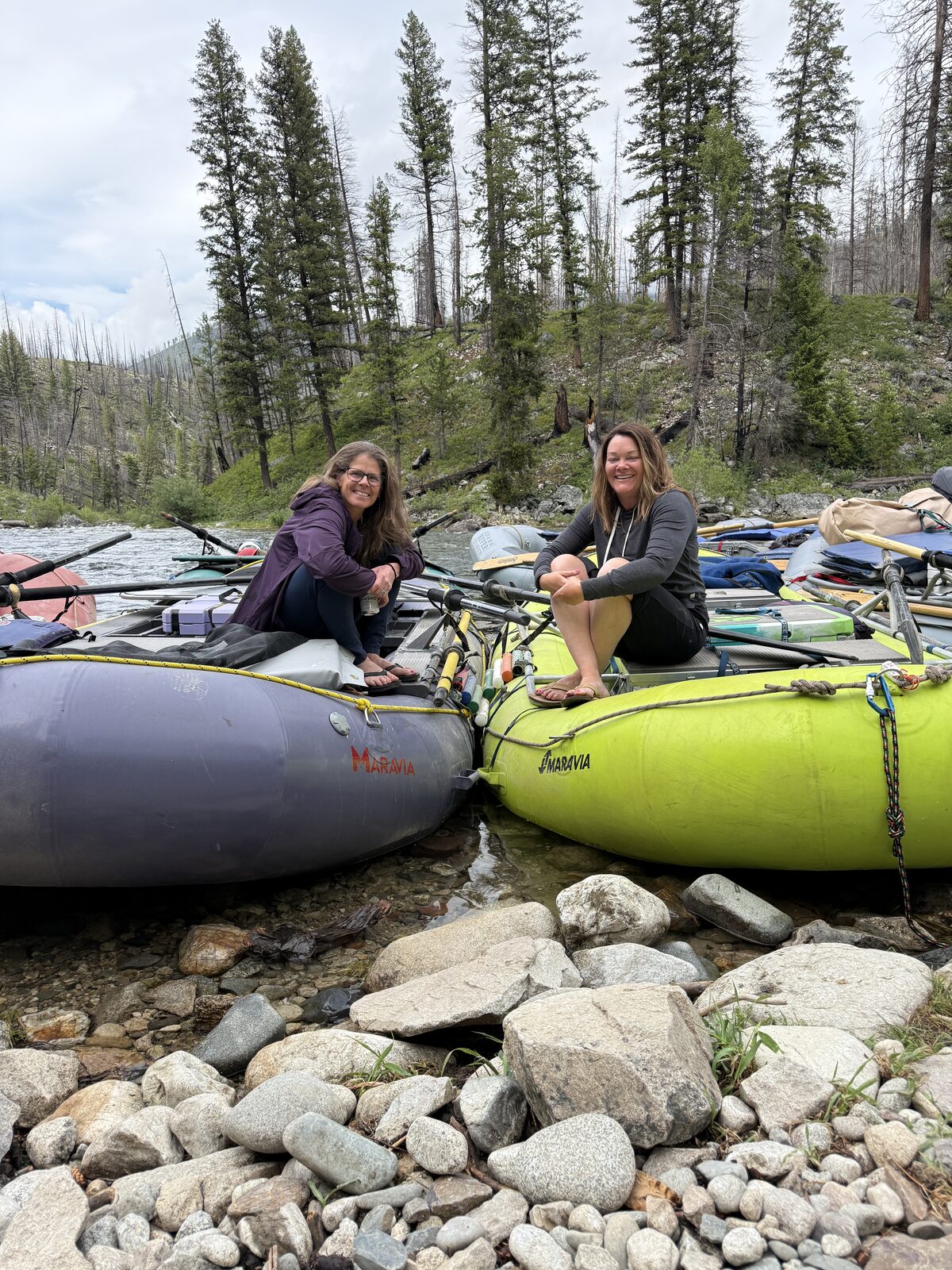
June 21 — Boundary Creek
Meet our first crew at the Middle Fork put in, rig the boats and camp at Boundary Creek. This would be our last night with road access for a while.
June 22 — Middle Fork Launch
Push off from Boundary Creek and begin the roughly 100 mile Middle Fork section with our first group.
June 27 — Cache Bar to Corn Creek
Reach Cache Bar, where most Middle Fork trips end. While the rest of our first crew headed home, Jen and I would keep floating another five miles to Corn Creek.
This was the first big handoff. New crew. New permit. Cooler restock. Same boats.
June 28 — Main Salmon Launch
Leave Corn Creek with crew number two and begin another 86 miles on the Main Salmon.
July 3 — Carey Creek
Our second crew would take out at Carey Creek.
Jen and I wouldn't.
This was the part of the plan that made the whole thing feel a little more ambitious. From Carey Creek, it would be just the two of us and our boats for roughly 55 miles through the Riggins stretch until we could meet our final group.
July 3 to July 8 — Just the Two of Us
Keep rowing.
No permit handoff. No larger crew. No support boat. Just Jen and me moving downstream, finding our own camps, managing our gear and running the whitewater between Carey Creek and Hammer Creek.
July 8 — Hammer Creek
Meet crew number three and begin the final section of the journey on the Lower Salmon.
By this point, Jen and I would have already been living on the river for more than two weeks.
July 11 — Salmon Meets Snake
Row the final miles of the Lower Salmon to its confluence with the Snake River.
Two hundred and ninety five miles.
If everything worked, we'd make it.
July 12 — Back to Civilization
Load our boats and gear onto a jet boat and ride back upriver to Pittsburgh Landing. Then drive home.
Simple.
Sort of.
100 Rapids in 100 Miles
The Middle Fork wasted very little time reminding me what kind of trip I had signed up for.
We launched at nearly three feet at the Boundary Creek ramp, an incredible level for the river.
Starting at Boundary Creek's 6,280 foot elevation, the Middle Fork drops quickly, and with roughly 100 rapids packed into 100 miles, the river begins with some of its most technical water. The upper 22 miles are home to classic whitewater and ever changing rapids, including Hells Half Mile, Velvet, the Chutes and Pistol.
It is technical, busy water that demands quick decisions and nearly nonstop time on the oars.
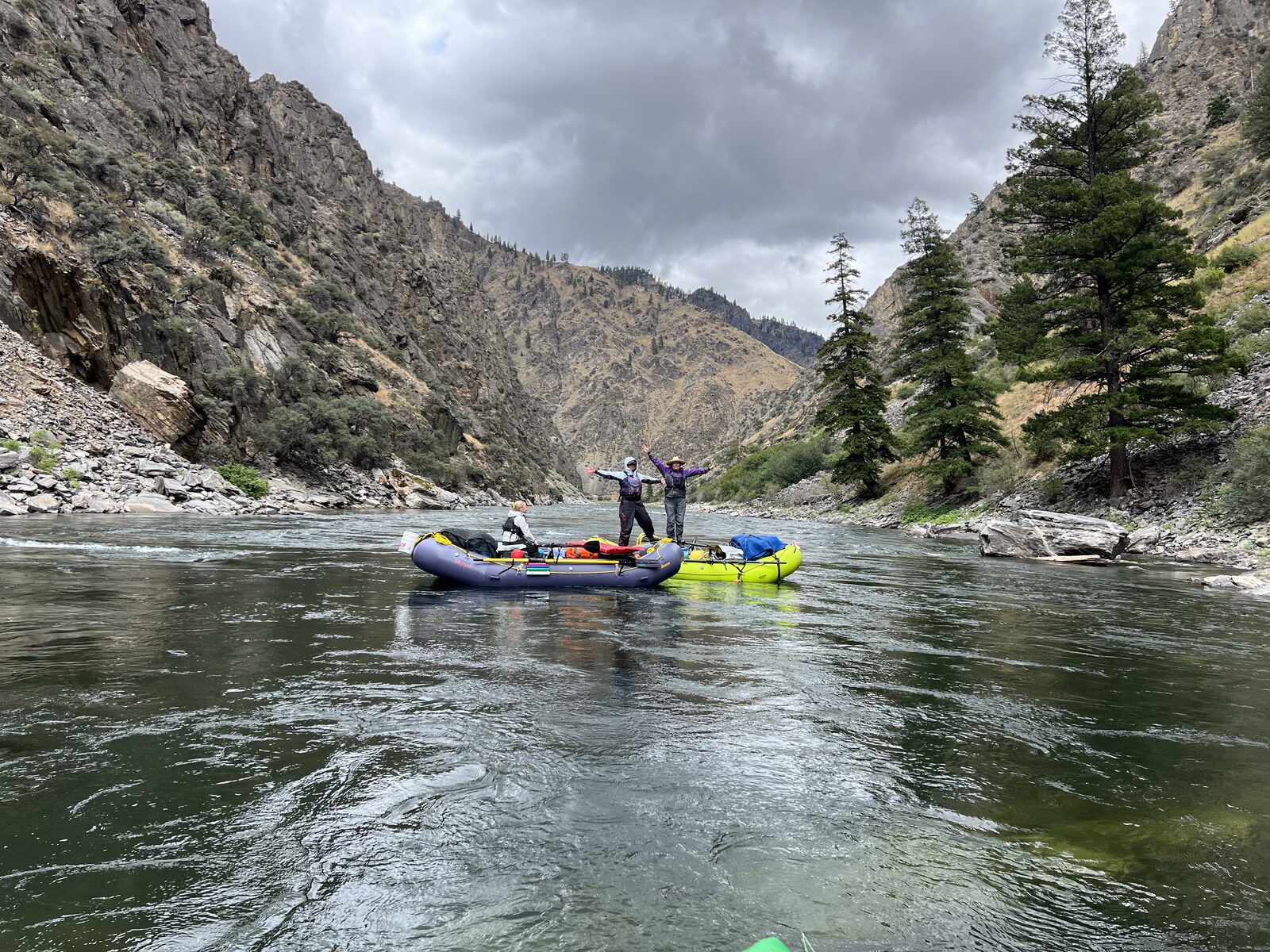
It's one of my favorite parts of the river, but it's also a stretch I have some history with.
Years ago, on my first time rowing the Middle Fork, I was ejected from my raft in Velvet during higher water.
Not my proudest moment.
And definitely something that adds a little extra nervous energy every time I return to the Middle Fork.
Velvet has changed significantly since then and, in my opinion, has gotten easier. But just upstream, Hells Half Mile has become considerably more challenging following major landslides. The new version is a long, rocky rapid that can be pretty intimidating.
And that's just day one.
Continuing downstream, the river doesn't exactly get easier. It gets deeper, picks up volume and keeps throwing rapids at you. The Tappan series, Weber, which I swear tries to get me every time I run it, and Rubber Rapid, where I've also flipped a boat, definitely keep your head on a swivel.
Every day, you roll into camp exhausted and happy, high fiving your friends and telling "no shit, there I was" stories about the day.
It's spectacular.
There is just nothing like the Middle Fork.
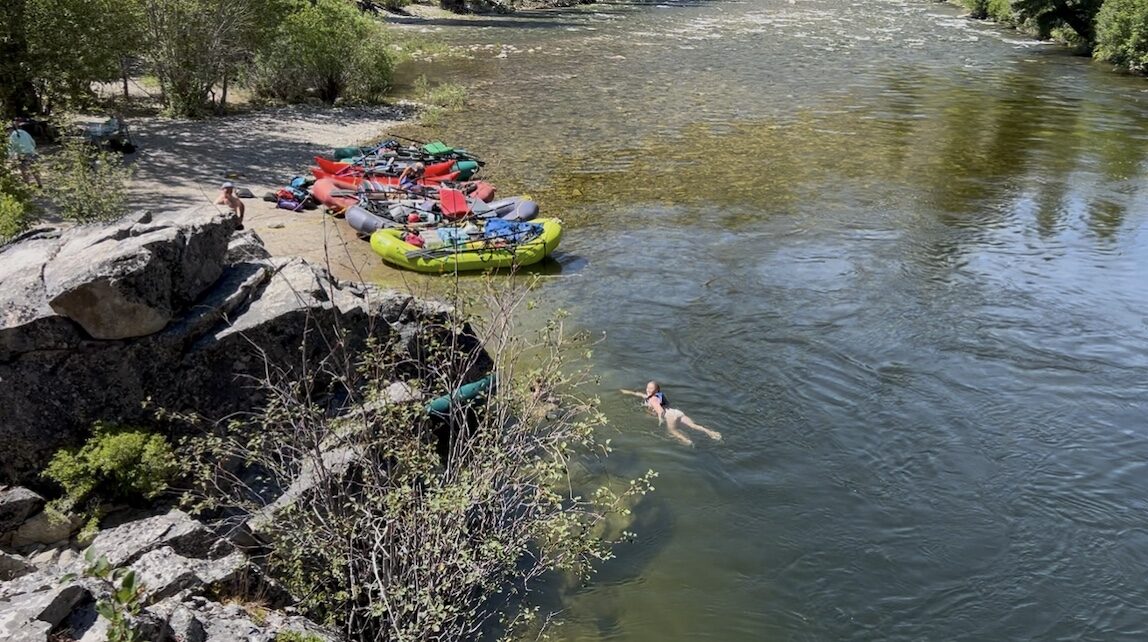
Our first group was small, just 10 people, which made moving down the river surprisingly efficient. We saw wildlife, ran incredible whitewater and spent our days moving deeper into one of the most remote landscapes in the country.
For most of the Middle Fork, the weather cooperated.
Then it didn't.
The final two days, the sky opened.
And apparently forgot how to close.
Rain came down continuously as our group worked its way toward Cache Bar. Tents were saturated. Even clothing tucked inside dry bags felt damp from the moisture in the air. We were soaked, and it wasn't exactly warm outside.
And the rain wasn't finished with us.
Turning the corner was exciting. I'd never done it before, and suddenly I was being introduced to another five miles of river and a handful of new rapids.
Then we reached Corn Creek.
Welcome to the Sufferfest
At Corn Creek, Jen and I met up with our second crew and launched onto the Main Salmon.
The weather followed.
Temperatures dropped dramatically, with daytime highs struggling to get out of the 40s. Snow began appearing on the ridges high above the canyon.
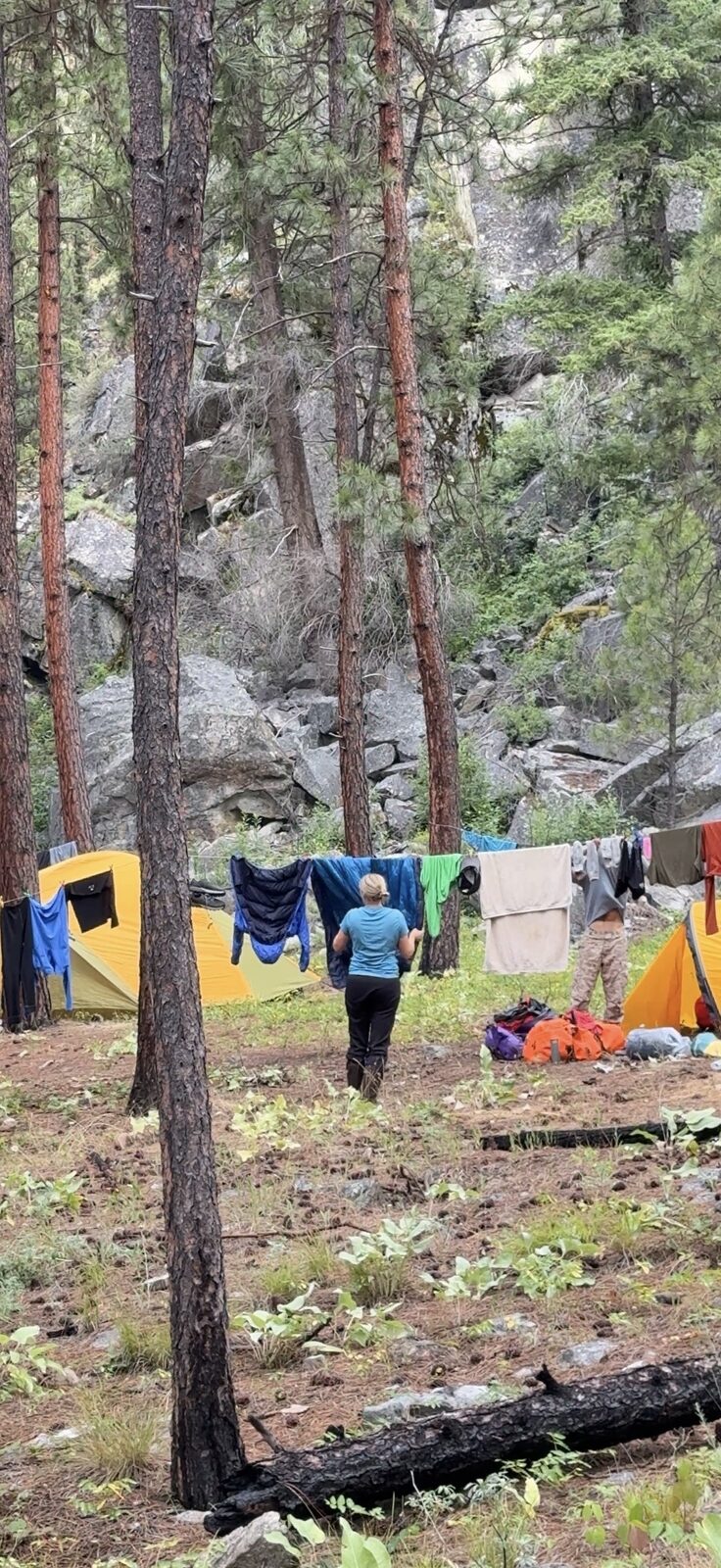
What had started as rain during our final days on the Middle Fork turned into a combined six day stretch of cold temperatures, torrential downpours, thunderstorms and hail.
At the same time, the river was rising.
Significantly.
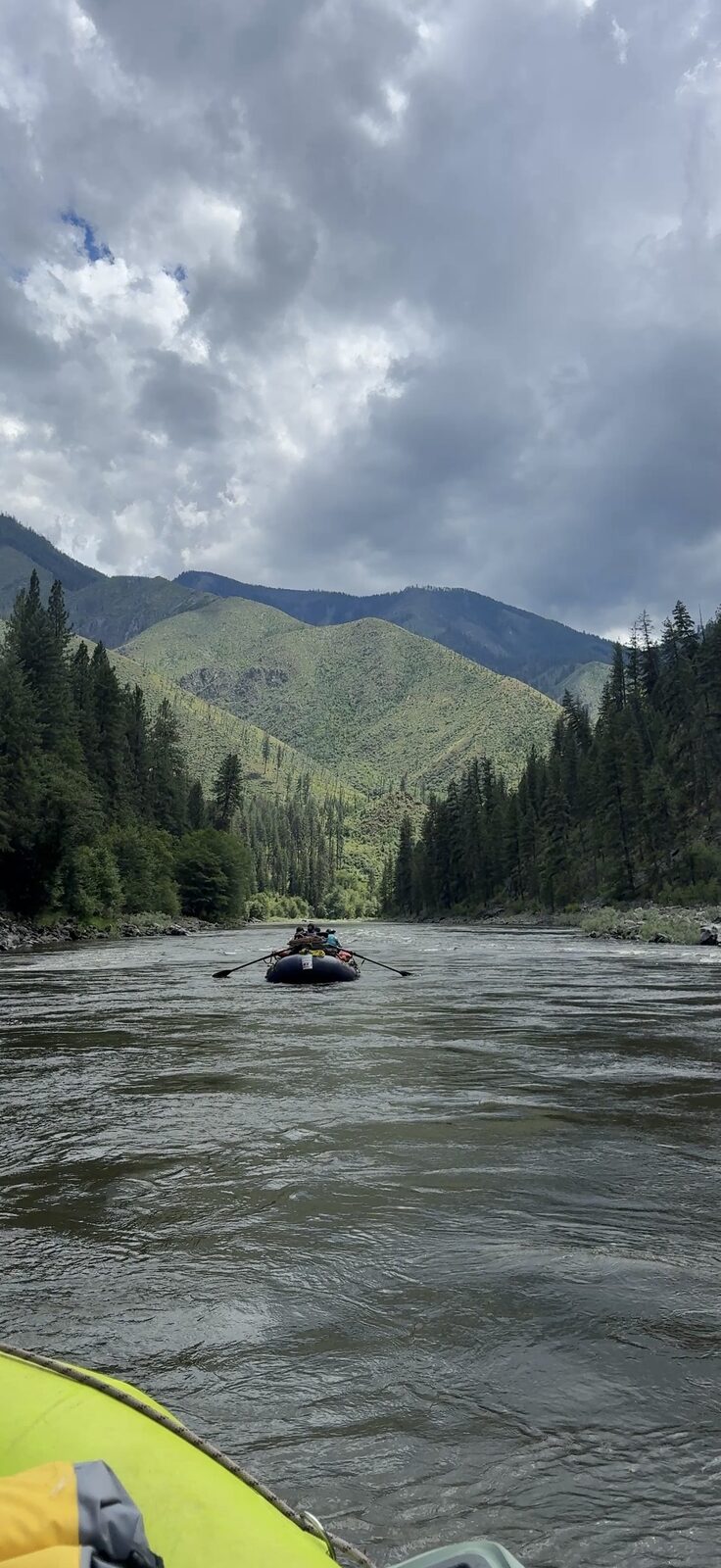
The Main Salmon is a different animal from the Middle Fork. The technical, busy nature of the Middle Fork gives way to bigger water and powerful rapids. With flows increasing, features were changing and the river demanded our attention.
Then people started swimming.
Black Creek is one of those rapids that just gets people.
Several years earlier, I'd watched it flip about seven boats in 15 minutes from three separate permits, including one boat from our group. I'll never forget watching ghost boats, completely empty of people, float past while gear that had been ripped loose in the violent waves bobbed downstream beside them.
Only a week or two later, that same rapid sank a jet boat.
Sometimes Black Creek is just mean.
This trip was no different.
It got one of our boats, flipping it and sending both passengers into the river.
Later that same day, two more boaters were ejected from their rafts in Five Mile Rapid.
The next day, Elkhorn got two more. The long swim that followed was scary, one of those moments that instantly reminds you that even when you're having the time of your life, the river deserves, and will have, your full respect.
Our crew responded exactly the way you hope a river crew will. People moved quickly. Everyone jumped in to help. The swimmers were recovered and, most importantly, everyone was okay.
A few people were understandably rattled.
But the river was just doing what she does.
And the weather wasn't letting up either.
At camp, everyone went to work. Tarps went up. Huge fires were built. Wet gear was hung anywhere we thought it might have a chance of drying. Then we woke up the next morning, climbed back into damp gear and did it all over again.
Somehow, the vibe stayed good.
That's something I've learned about river trips. The rapids might be what we talk about afterward, but the people can make or break the experience.
This group made it.
We were surrounded by tough, resilient humans who kept showing up for one another, even when everyone was cold, wet and tired.
Then, after nearly a week of rain, hail, swims, rising water and very little sunshine, something miraculous happened.
The sun came out.
Suddenly, we were rafting in shorts and T shirts.
After six days of being cold and wet, bare arms and sunshine felt borderline luxurious.
I call this part of the trip the sufferfest, but the truth is, I loved it.
I loved the water level. I loved the big rapids. I loved our group. And in a weird way, I even appreciated the challenge of the weather.
There was something about being out there, battling the elements, taking care of one another and continuing to move downstream that made the whole experience feel a little more earned.
And maybe it was.
Because when the sun finally came out, it felt really damn good.
And Then There Were Two
At Carey Creek, our second crew left.
Jen and I watched them drive away on the dirt road that followed the river, honking, waving and cheering us on as they went.
Then we looked at each other.
There were roughly 55 miles between us and our final group.
Time to row.
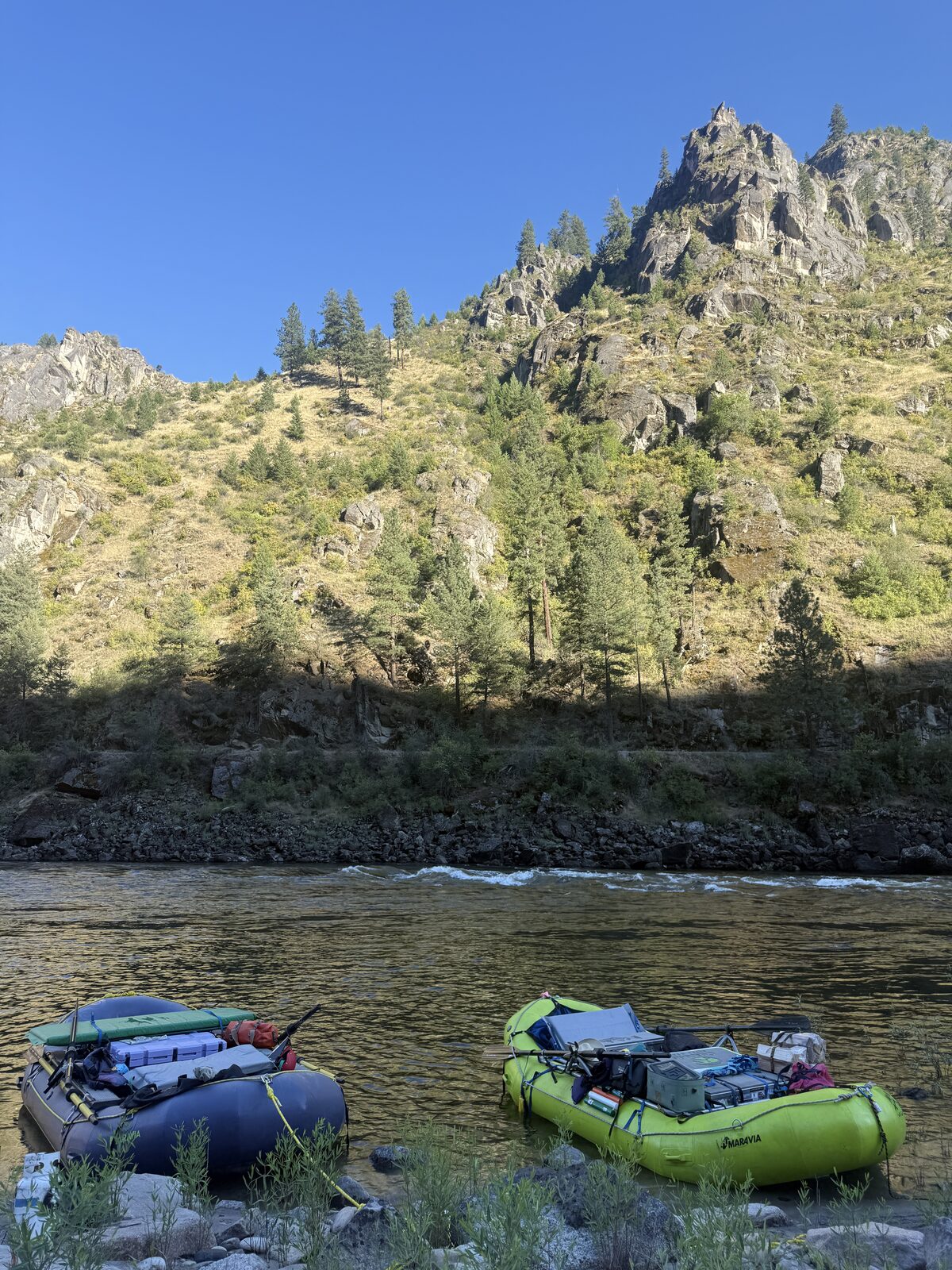
There was something incredibly freeing about suddenly having only two people to worry about.
Our camps didn't need to accommodate a dozen tents. Dinner didn't require a full camp kitchen. We found tiny beaches barely large enough for the two of us and, on the first night, proudly reduced our culinary ambitions to backpacker meals made with the help of a Jetboil.
No elaborate dinner. No giant kitchen setup. Add hot water. Eat. Done.
Perfect.
But simplifying camp didn't mean the river itself had become simple.
The water was still running big, and this stretch carried us through the Riggins area, where the whitewater demanded our attention. We were no longer part of a flotilla of boats with a larger crew around us. There wasn't a bigger group behind us if we flipped a boat or something went wrong.
The plan was simple.
Don't screw up.
It was Jen and me.
We were responsible for our own gear, our own camps, reading our own water and making our own decisions.
After spending our first night above Riggins, we decided to make a quick stop in town for a brief taste of civilization and, more importantly, a burger.
It was the Fourth of July, after all.
Burgers eaten, we pushed our boats away from shore and left civilization behind again, camping just below town on a tiny sandbar.
The next morning, we pushed off our tiny sandbar early.
Time Zone Rapid was just around the corner, and we got right into it.
I remember dropping into the rapid and immediately feeling the power of the water beneath my boat. The hydraulics felt bigger than I expected, and somewhere in the middle of it I had one very clear thought:
Whoa. That felt a little big.
There wasn't much time to think about it. The current was moving fast, and the rapids started coming in quick succession.
Then we came to Fiddle.
I'll never forget what it looked like from my boat.
Whitewater stretched from shore to shore, with big standing waves stacked across the river and plenty of places I knew I didn't want to end up. From where I sat, it looked HUGE.
And we were getting closer.
I sat on my boat studying the water as we floated toward it, looking for the line. The river kept pulling us downstream, the whitewater kept getting bigger and, for a few moments, I couldn't quite see where I wanted to go.
Then it appeared.
There it was.
I lined up my boat and sent it.
The waves were big. The water was powerful. But my boat tracked exactly where I wanted it to go.
Jen went through clean.
I did too.
We hooted and hollered across the river, riding that little burst of adrenaline that comes when something looks really big from above and you absolutely style it.
And then we kept rowing.
That was the rhythm of the Riggins stretch. Big water, fast current and not a lot of time to sit around congratulating yourself before the next rapid appeared.
We also encountered whitewater that was completely new to us, including Blackhawk, a zesty little Class IV neither of us had ever seen before.
We didn't scout it. We trusted our ability to read the water from our boats, found a beautiful line along the right shoreline and admired the chaos unfolding in the middle from a much better vantage point.
It was one of the last big challenges of our solo stretch, and we didn't just make it through.
We styled it.
By then, that trust wasn't just in our own boating abilities.
It was in each other, too.
Jen and I had also made a deal. After more than two weeks of nearly continuous rowing, we wanted a rest day.
But first, we had to earn it.
We were going to make miles.
So we did.
After covering roughly 50 miles from Carey Creek to just above White Bird, we found an incredible beach.
And stopped.
For an entire day.
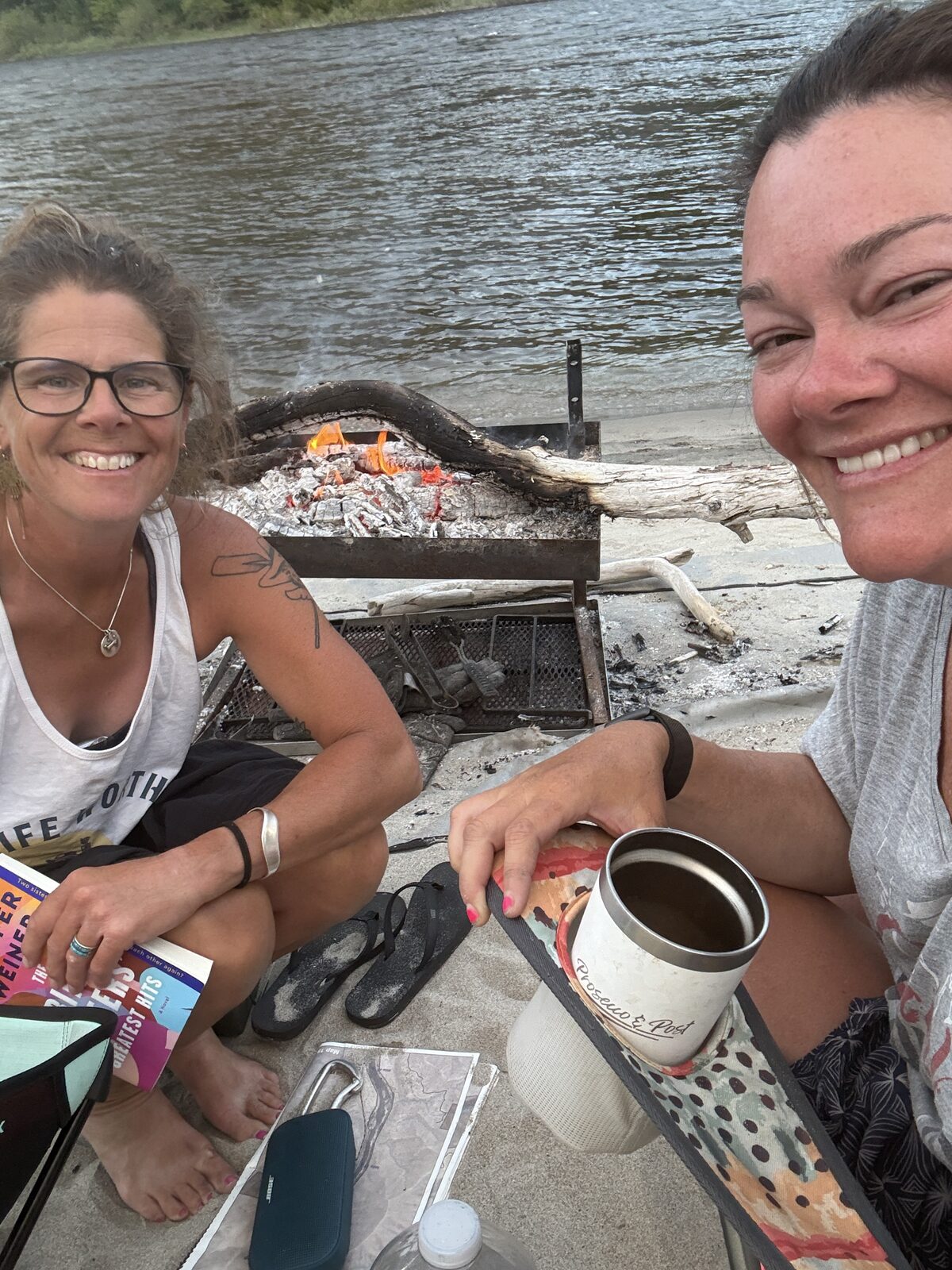
We slept in.
We didn't take down our tents. We didn't rig boats. We didn't pack dry bags. We didn't do much of anything.
It was glorious.
After more than two weeks of constantly moving downstream, doing absolutely nothing felt like the greatest luxury imaginable.
By the time we finally pushed off again, we were rested, reenergized and ready for the final leg.
We rowed the remaining miles to Hammer Creek and waited for our friends to arrive.
Crew number three.
One final stretch of river.
The Last Miles
The Lower Salmon felt different again.
The weather was HOT.
The water was still higher than we'd typically seen it at that time of year, making familiar rapids bigger and more exciting.
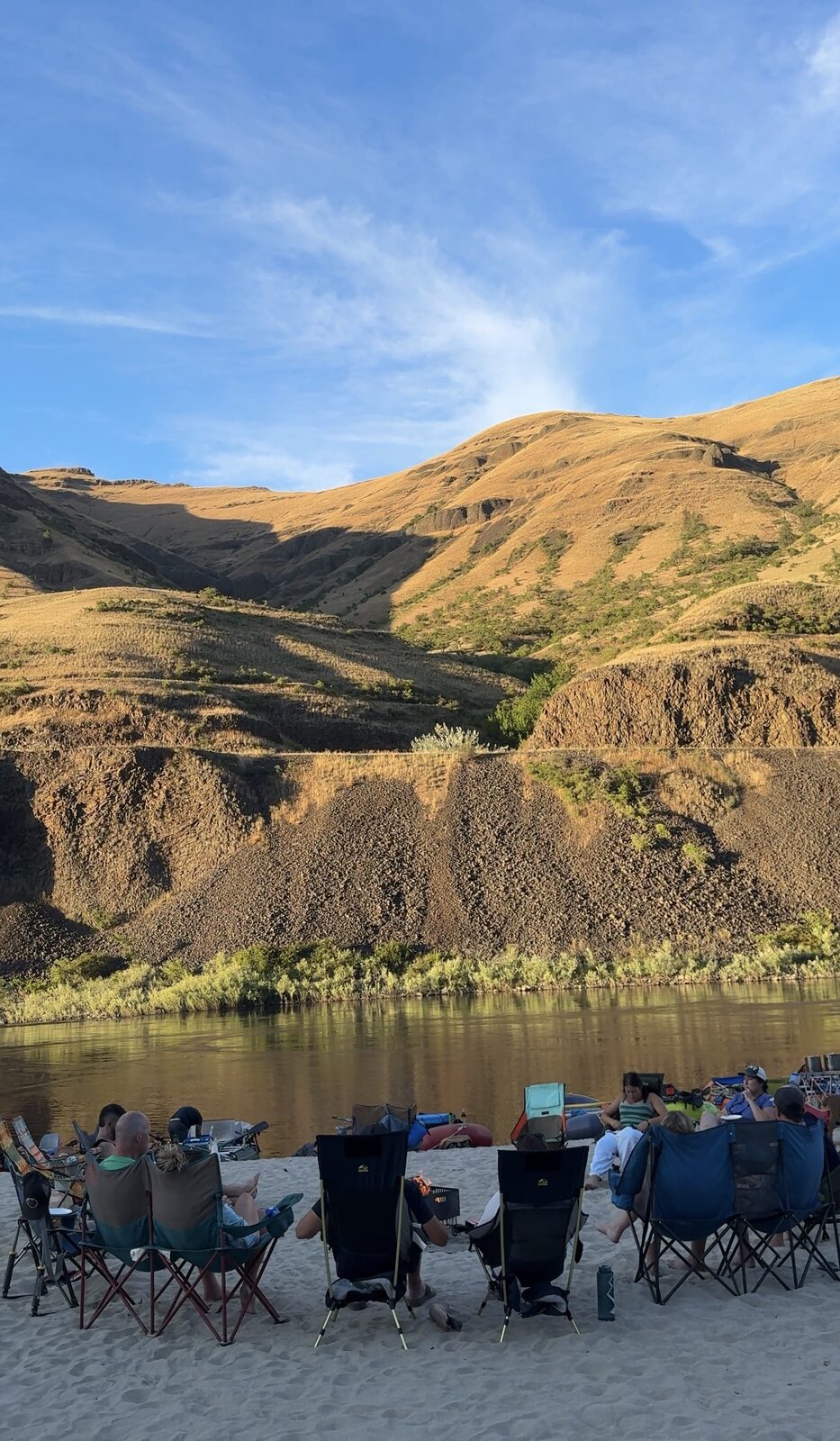
Huge sandy beaches replaced the wet camps of the previous weeks. Afternoons meant swimming. Our final group was phenomenal. And somehow, we encountered far less competition for camps than we expected.
After weeks of rain, cold and complicated logistics, life became wonderfully simple.
Row. Swim. Eat. Sleep. Repeat.
Then the miles started disappearing.
And I wasn't ready for them to.
For three weeks, my life had revolved around an incredibly basic rhythm.
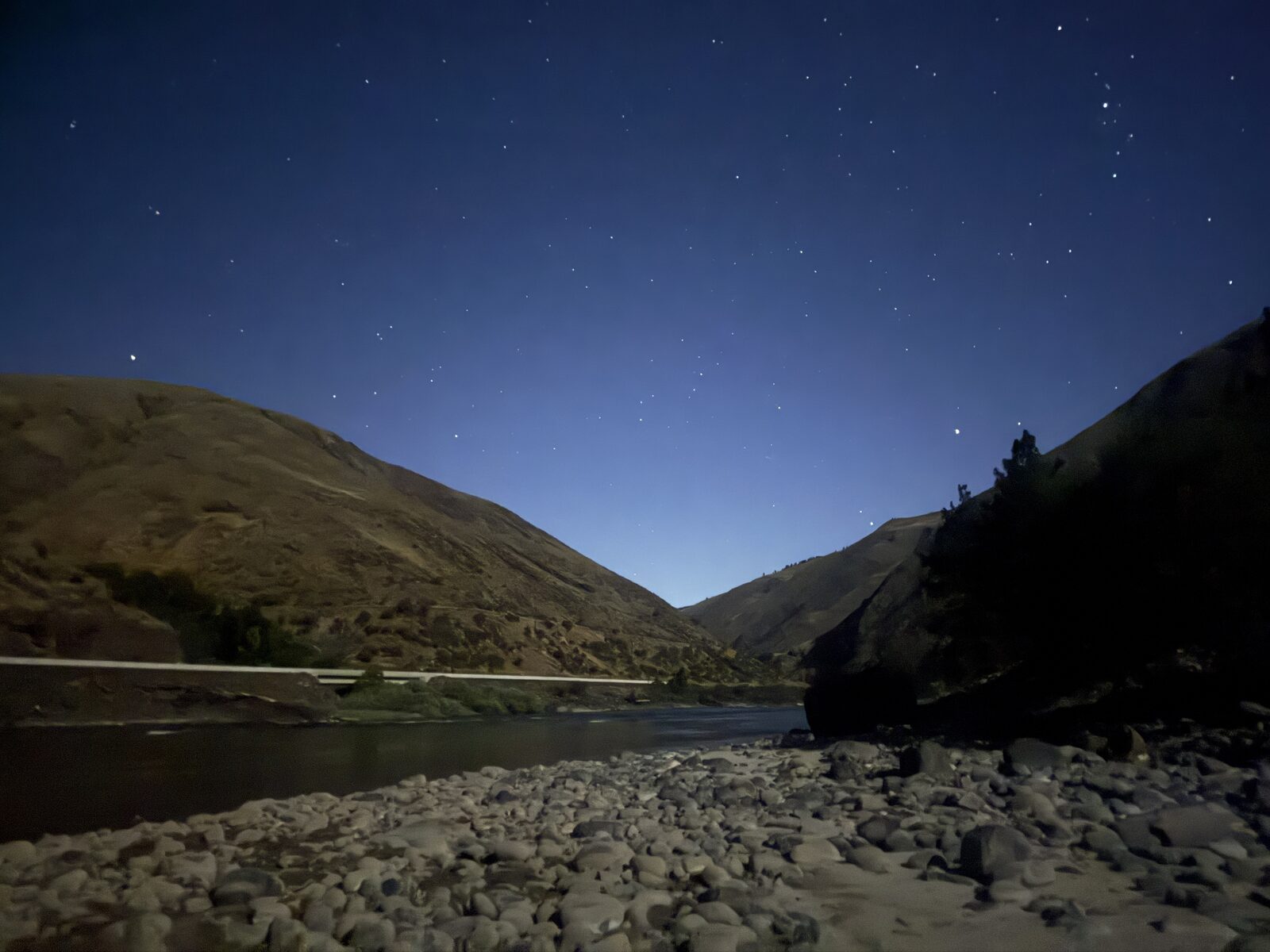
Wake up. Pack the boat. Read the water. Row. Find camp. Eat. Sleep under a sky with more stars than seems reasonable. Do it again.
There were no traffic jams. No errands. No closets full of things I didn't need. No constant rush from one obligation to another.
My world had become remarkably small.
And enormous at the same time.
Then we rounded another bend and realized we were almost there.
The Snake River.
After 295 miles, hundreds of rapids, three different crews, two permits, changing water levels, a six day sufferfest, swims, a flip, tiny beaches, huge beaches, backpacker meals, roaring campfires and more time on the oars than I could count, the Salmon was about to disappear into another river.
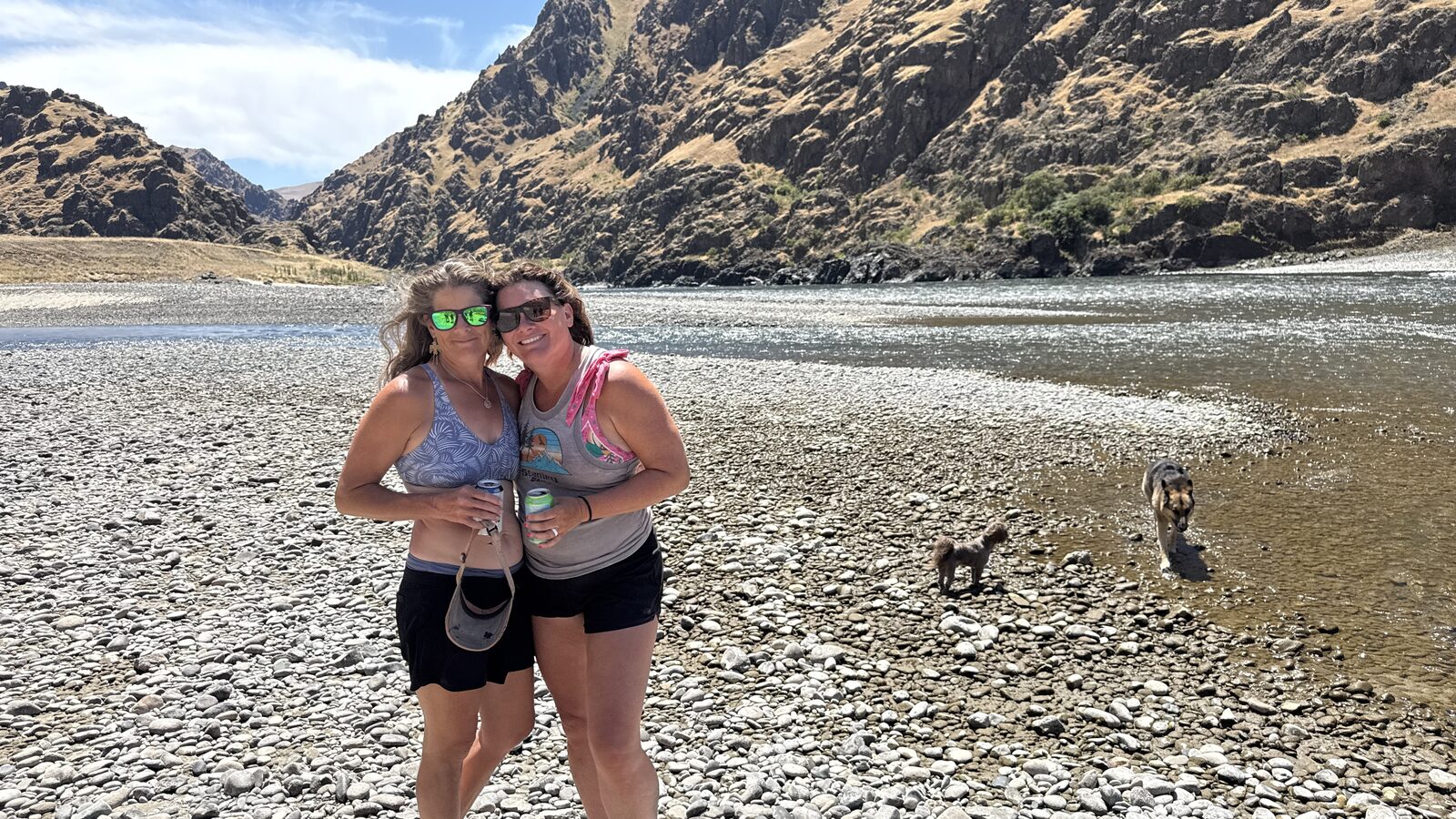
It didn't feel real.
Neither Jen nor I was ready for it to end.
We reached the confluence, broke down our boats and loaded everything onto a jet boat for the ride back upriver to Pittsburgh Landing.
Just like that, it was over.
Three weeks on the river. One night under the stars on the Snake. And then, civilization.
What I Was Most Proud Of
It wasn't until I got home that I really started thinking about what we'd done.
Of course I was proud that we'd completed the 295 miles. That alone had been on my bucket list for years.
But strangely, the mileage wasn't what I felt most proud of.
Jen and I had both run the entire thing clean.
No flips. No swims. No getting stuck on rocks.
For 295 miles of wild river, through technical water, rising flows, big rapids and conditions that changed constantly, we both had squeaky clean runs.
As a boater, that felt pretty damn good.
But there was something else I was even more proud of.
We had sent part of it solo.
Two women. Two boats. All of our gear. And nobody coming along to handle the complicated parts for us.
A multiweek whitewater trip involves an almost ridiculous number of moving pieces. Food, water, camping gear, boat repair, rigging, navigation, weather, camp selection, mileage, changing flows and hundreds of tiny decisions have to be managed along the way.
And then, of course, you still have to row the rapids.
The Riggins stretch is no joke.
The water was big, and Jen and I ran sections we'd never seen before, including Blackhawk, that zesty little Class IV that gave us one more opportunity to trust our read of the water and send it.
What struck me afterward wasn't that we had anything to prove.
It was the realization that we were completely capable of doing it.
We managed the logistics. We took care of ourselves. We made good decisions. We read the water. We ran the rapids.
And we had a hell of a lot of fun doing it.
That quiet confidence may have been one of my favorite things I brought home from the entire trip.
The Problem With Coming Home
I thought three weeks in the wilderness might make me ready for home.
It did the opposite.
Coming back to society felt strangely difficult.
Life suddenly seemed loud. Fast. Complicated.
On the river, so much of the noise had disappeared.
There were still problems to solve. In fact, some of those problems involved thousands of pounds of moving water and demanded immediate solutions.
But life had become wonderfully present.
I dealt with what was directly in front of me.
The rapid. The weather. The person who needed help. The camp that needed to be built. The fire that needed another log.
Maybe that's why the trip changed my perspective more than I expected.
I went into it wanting to check something off my bucket list.
295 miles of the Salmon River. Done.
But that's not really what happened.
I came home with a deeper confidence in what I was capable of, an even greater appreciation for the people I choose to share wild places with and a craving for more time outside, not less.
Instead of satisfying my appetite for adventure, those three weeks made it stronger.
I want more wild places. More nights sleeping outside. More mornings when the first decision of the day is how to read the water ahead. More experiences that make me wonder whether I'm capable of doing something, and then give me the chance to find out.
Maybe some bucket list trips are supposed to give us closure.
This one didn't.
It left the door wide open.